Home Organization
How to Declutter Your Home: A Practical Room-by-Room Weekend Plan
A clearer home is easier to clean, easier to organize and easier to live in. You do not need special products to get there, just a simple method and a sensible order of rooms.
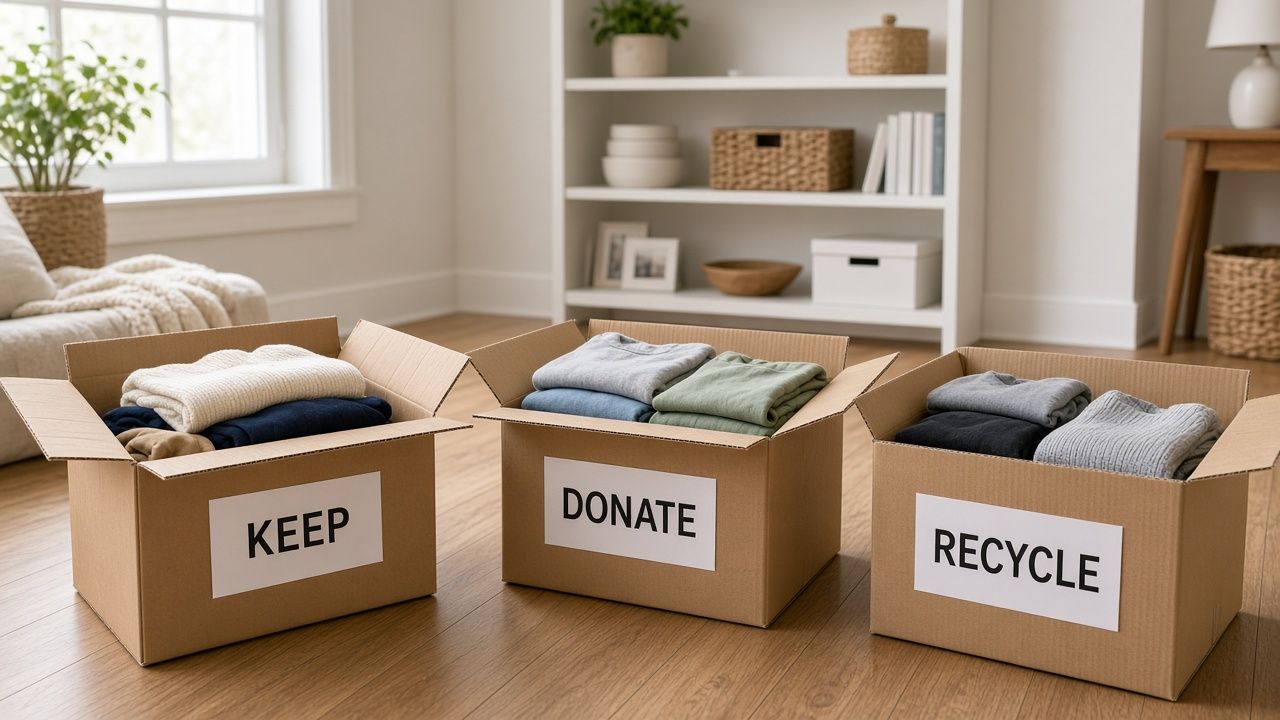
Decluttering feels overwhelming when you look at the whole house. It becomes manageable when you break it into small, specific sessions with clear rules. This plan fits into a weekend for a small home, or a few weekends for a larger one.
1. Set up the four boxes
Before you start, label four boxes or bags: Keep, Donate/Sell, Recycle and Trash. Add a fifth "Elsewhere" basket for items that belong in another room. Every item you pick up goes into one of them; no "I'll decide later" piles.
2. Start with the easiest room
Start somewhere with low emotional weight and quick wins, like a bathroom cabinet or the entryway. Seeing one space finished in an hour builds momentum. Leave sentimental items such as photos, letters and gifts for last, once your decision-making "muscle" is warmed up.
3. Room-by-room order
- Bathroom: expired products, duplicate items, old towels.
- Entryway: shoes and coats not worn this season, bags, keys.
- Kitchen: duplicate utensils, chipped dishes, unused gadgets, expired pantry food.
- Living room: media, magazines, decor you no longer like.
- Bedrooms and closets: clothes that do not fit or you have not worn in a year.
- Garage or shed: broken tools, leftover materials, old paint (dispose of it as local rules require).
- Sentimental items: keep the best, photograph the rest if that helps.
Work in 30–60 minute blocks with short breaks. A timer helps.
If you would like a more structured, step-by-step decluttering program to follow, there is a paid guide many readers look at.
Disclosure: this is an affiliate link — if you buy, we may earn a commission at no extra cost to you. Learn more
Look at Declutter Fast → (affiliate link)
4. Decide what stays
Ask three questions about each item:
- Have I used it in the last year?
- Would I buy it again today?
- Do I have a place for it?
Two "no" answers usually means it can go. For duplicates, keep the best one or two. A "maybe" box sealed with a date written on it is fine. If you have not opened it in six months, donate it unopened.
5. Get it out of the house
Clutter that sits in bags by the door tends to creep back. Schedule the donation drop-off or recycling run for the same day or the next morning. List sale items within a week or donate them. Check local guidelines for electronics, batteries and paint, which often need special drop-off points.
6. DIY storage that helps
Only once you have decluttered, add storage for what remains:
- A simple wall shelf or storage crate for an entryway or closet.
- Labeled bins on garage shelves, grouped by activity (garden, painting, car).
- Pegboard or French cleats in a garage or workshop.
- Drawer dividers made from scrap wood or small boxes.
Buying storage first often just organizes clutter instead of removing it.
7. Keep it from coming back
- One in, one out: when something new comes in, something similar leaves.
- Ten-minute reset: each evening, return items to their homes.
- A donation bag lives in a closet; when it is full, it goes.
- Seasonal check: a quick pass through closets and the garage every few months.
A sample two-day schedule
Saturday morning: bathroom and entryway (about 2 hours). Saturday afternoon: kitchen cabinets and pantry (2–3 hours). Sunday morning: living room and one bedroom closet (2–3 hours). Sunday afternoon: donation drop-off, recycling run, and putting the Keep items away.
If you live with others, agree on the rules first: everyone decides on their own things, and shared items are decided together. Children can help with toys by choosing a set number to keep, which turns decisions into a game rather than a negotiation.
Paper and digital clutter
Paper piles grow quietly. Sort mail daily into act, file and recycle. Scan or photograph documents you only need for reference, and keep originals of important records in one labeled folder or box. Shred anything with personal information before recycling it. For digital clutter, unsubscribe from a few marketing emails each day and delete old downloads, a small habit that adds up over a month.
Want a structured decluttering program?
Declutter Fast (declutterfast.com, sold through ClickBank) is a digital guide to decluttering and organizing your home.
According to the vendor, it offers a step-by-step method for getting a home in order. Those are the seller's claims; how fast it goes depends on your home, your schedule and how much you have to sort.
Pros
- Structured method if you prefer to follow a program
- Can help with motivation and order of tasks
- Digital product sold through ClickBank's standard refund process
Caveats
- You still do all the sorting yourself
- The free plan above may be enough for many homes
- Order pages may show upsells you can decline
Affiliate link — we may earn a commission at no extra cost to you.
Disclosure & Privacy
This page contains affiliate links. If you buy through them we may earn a commission at no extra cost to you. Descriptions of Declutter Fast repeat claims published on the vendor's own website; we have not independently verified them. This article is general information, not professional advice. SeeDIY is an independent publisher and is not affiliated with the vendor beyond the ClickBank affiliate program. Full details: Affiliate Disclosure, Privacy Policy, Cookie Policy, Terms of Use.
We do not sell your personal information. Hosting, DNS, and security run through Cloudflare Pages and Cloudflare. Questions: our contact form
Frequently asked questions
Where should I start decluttering?
Start with a small, low-emotion space such as a bathroom cabinet or entryway, and leave sentimental items for last.
How do I decide what to get rid of?
Ask whether you have used it in the last year, whether you would buy it again, and whether it has a place. Two no answers usually means it can go.
Should I buy storage containers before decluttering?
No. Declutter first, then buy or build storage for what remains, so you only store items you actually keep.