Backyard Aquaponics
Aquaponics for Beginners: How to Plan a Small Backyard System
Aquaponics lets you grow herbs and greens in a closed loop with fish, using a pump, a tank and a grow bed you can build yourself. This beginner guide explains how it works, the parts you need, how to start the system safely and what to expect week to week.
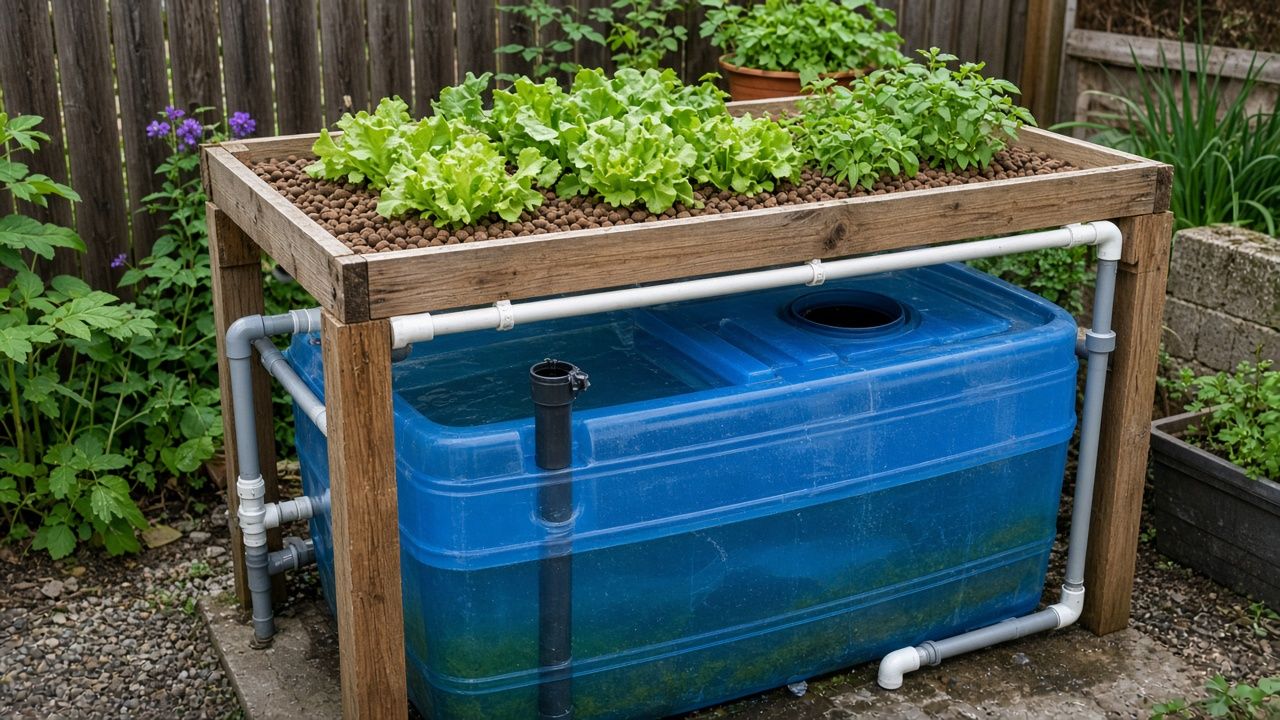
1. How aquaponics works
Aquaponics combines raising fish (aquaculture) with growing plants in water (hydroponics). Fish waste produces ammonia; beneficial bacteria convert it into nitrites and then nitrates, which plants use as fertilizer. The plants and their growing media help clean the water, which returns to the fish. Once it is balanced, you mostly add fish food and top up water.
It is a fascinating project for gardeners, families and anyone who likes to tinker, but it is a living system. It needs daily attention to the fish and a few weeks of patience at the start.
2. Choose a system type
- Media bed: a grow bed filled with clay pebbles or gravel that floods and drains. The most beginner-friendly design; the media also acts as the filter.
- Deep water culture (rafts): plants float on rafts over oxygenated water. Great for lettuce, but needs separate filtration.
- NFT (nutrient film): a thin stream of water runs through channels. Space-efficient but less forgiving.
Most home builders start with a media bed over a fish tank, often using a food-safe IBC tote or a large stock tank.
3. Parts list
- A fish tank (food-safe, opaque, sized for your space)
- A grow bed roughly equal in volume to the tank
- Grow media: expanded clay pebbles or washed, pH-neutral gravel
- A submersible pump and tubing
- A bell siphon or timer for flood-and-drain
- An air pump and air stones
- A water test kit for pH, ammonia, nitrite and nitrate
- A sturdy stand. Water is heavy, so build it strong and level.
Our small shop guide covers the tools for building a wooden stand or grow-bed frame.
If you would like a full set of build plans and diagrams for a home system, there is a paid aquaponics guide many hobbyists look at.
Disclosure: this is an affiliate link — if you buy, we may earn a commission at no extra cost to you. Learn more
Look at Aquaponics 4 You → (affiliate link)
4. Cycle the system
Before adding fish, grow the bacteria colony. This is called cycling and usually takes several weeks.
- Fill the system with dechlorinated water and run the pump.
- Add an ammonia source, following a reliable fishless-cycling guide.
- Test the water every few days. You will see ammonia rise, then nitrite, then nitrate.
- When ammonia and nitrite both read near zero and nitrate is present, the system is ready for a few fish.
5. Fish and plants for beginners
Fish: goldfish and koi are hardy ornamental choices; tilapia, perch or trout are common food fish where legal and climate-appropriate. Check local regulations, since some species are restricted, and research the temperature range your fish need.
Plants: leafy greens and herbs are easiest: lettuce, basil, mint, chard, kale and watercress. Fruiting plants like tomatoes and peppers need a mature, well-stocked system.
6. Weekly routine
- Daily: feed the fish what they eat in a few minutes; check the pump is running.
- Weekly: test pH and ammonia; top up evaporated water with dechlorinated water.
- Monthly: clean pump intakes and check plumbing for leaks or roots.
7. Common beginner mistakes
- Adding fish before the system has cycled.
- Overfeeding, which spikes ammonia.
- Clear tanks in sunlight, which grow algae.
- No backup plan for power cuts. An air pump on battery backup protects the fish.
Sizing your first system
A common rule of thumb for media-bed systems is a grow bed volume roughly equal to the fish tank volume, with the bed about 12 inches deep so the media can host bacteria and support roots. A modest first system might use a 50–100 gallon tank and a single bed. Smaller systems are cheaper but swing faster in temperature and water chemistry, so a slightly larger, simple setup is often easier to keep stable than a tiny desktop one.
Stock fish lightly at first. Start with a few fish, watch your test results for a few weeks, and only add more when ammonia and nitrite stay near zero. It is far easier to add fish to a stable system than to rescue an overloaded one.
Indoor vs. outdoor
Outdoors, you get free sunlight but must manage heat, cold, rain diluting the water and predators such as birds or raccoons. Shade cloth and a tank lid help. Indoors, you control temperature but need grow lights and should place the system on a floor that can handle the weight, ideally somewhere a leak will not cause damage. In both cases, keep electrical connections off the floor and use a GFCI-protected outlet near water.
Want detailed build plans for a home system?
Aquaponics 4 You (aquaponics4you.com, sold through ClickBank) is a digital guide to building and running a home aquaponics system.
According to the vendor, it provides instructions for setting up a DIY aquaponics system at home. The vendor's marketing makes strong claims about plant growth; we do not repeat them as fact. Real results depend on your climate, fish care, water quality and experience.
Pros
- Build-focused guide for a DIY home system
- Useful if you prefer one structured resource
- Digital product sold through ClickBank's standard refund process
Caveats
- Marketing growth claims are optimistic
- Aquaponics still needs daily fish care and testing
- Order pages may show upsells you can decline
Affiliate link — we may earn a commission at no extra cost to you.
Disclosure & Privacy
This page contains affiliate links. If you buy through them we may earn a commission at no extra cost to you. Descriptions of Aquaponics 4 You repeat claims published on the vendor's own website; we have not independently verified them. This article is general information, not professional advice. SeeDIY is an independent publisher and is not affiliated with the vendor beyond the ClickBank affiliate program. Full details: Affiliate Disclosure, Privacy Policy, Cookie Policy, Terms of Use.
We do not sell your personal information. Hosting, DNS, and security run through Cloudflare Pages and Cloudflare. Questions: our contact form
Frequently asked questions
How long does it take to start an aquaponics system?
Building can be a weekend, but cycling the water to grow beneficial bacteria usually takes several weeks before fish are added.
What are the easiest plants for aquaponics?
Leafy greens and herbs such as lettuce, basil, mint, chard and kale.
Does aquaponics work outdoors in winter?
Only if you can keep water within your fish's safe temperature range, for example in a greenhouse or heated space.